
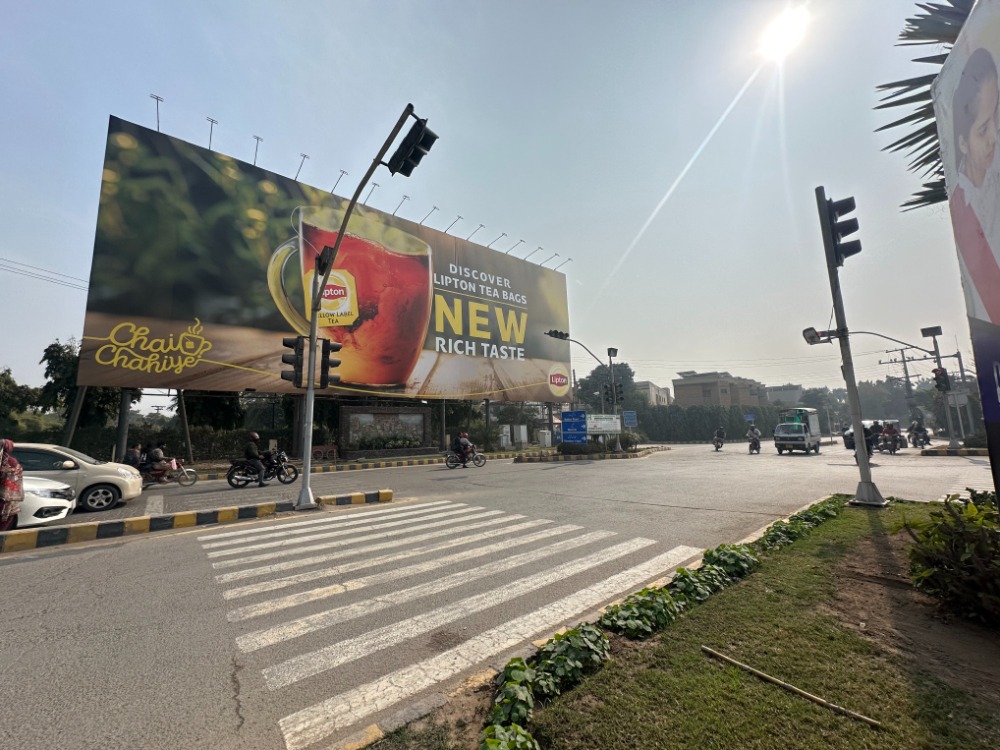
Outdoor advertising works best where attention naturally slows down. Traffic signals and busy intersections are among the few places in a city where people are forced to pause, observe, and wait. For advertisers, this pause is not a delay, it is an opportunity.
In Lahore, where traffic congestion and signal stops are part of daily routine, these moments create high-value exposure points that brands can use to build strong recall.
Understanding how commuters behave at signals and intersections helps advertisers design better campaigns, choose the right locations, and get more value from every billboard placement.
Why Signals and Intersections Matter for Outdoor Advertising?
Unlike highways or fast-moving roads, signals and intersections create controlled stops. Vehicles line up, engines idle, and drivers along with passengers have a few seconds where their attention shifts from driving to observing surroundings.
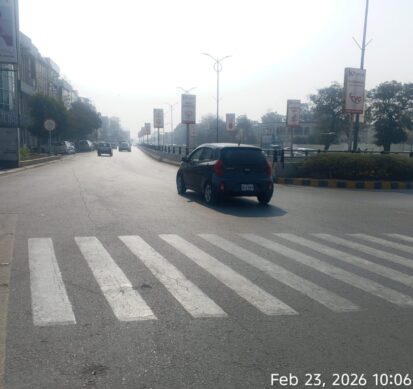
Locations like Lalak Jan Chowk and Ghora Chowk are prime examples where traffic naturally slows down or stops multiple times a day. These are not just high-traffic areas, they are high-attention zones.
Studies in outdoor advertising suggest that dwell time at signals can range from 20 to 90 seconds depending on congestion levels. That is significantly higher than the 2 to 3 seconds of exposure on moving roads. This difference directly impacts how well a message is seen, processed, and remembered.
The Psychology of Commuter Attention
When vehicles stop at signals, driver behavior changes. Instead of focusing completely on the road, attention becomes more relaxed and exploratory. People start looking around, checking surroundings, or simply observing what is in front of them.
This shift creates three key advantages for advertisers:
-
Longer Viewing Time: More seconds mean better chances of reading and understanding the message.
-
Higher Recall: Repeated exposure at the same signal builds familiarity.
-
Reduced Distraction: Less movement allows clearer visibility of ads.
Passengers in vehicles are even more likely to engage with billboards. Since they are not driving, their attention span is higher, making them an important secondary audience in OOH campaigns.
Importance of Repetition at Daily Routes
Most commuters follow fixed daily routes. A person traveling through the same signal every morning and evening is exposed to the same billboard multiple times a week.
This repetition plays a major role in brand recall. Even if someone does not actively focus on an ad the first time, repeated exposure at signals gradually builds familiarity. Over time, the brand becomes recognizable without conscious effort.
For example, a billboard placed at a major DHA intersection like Lalak Jan Chowk can generate thousands of repeated impressions daily from the same audience segment. This consistency is what makes signal-based advertising more effective than random placements across the city.
Visual Clarity and Message Simplicity
Having more time does not mean complicated ads work better. In fact, signal-based advertising performs best when the message is simple and instantly understandable.
Key elements of effective billboard design at intersections include:
-
Short Headlines: Clear and readable within a few seconds
-
Bold Fonts: Easy visibility from a distance
-
High Contrast Colors: Better readability in daylight and night
-
Single Message Focus: Avoid clutter or multiple ideas
Drivers should be able to grasp the core message without effort. If the design requires thinking or reading too much, the opportunity is lost.
Role of Positioning and Angles
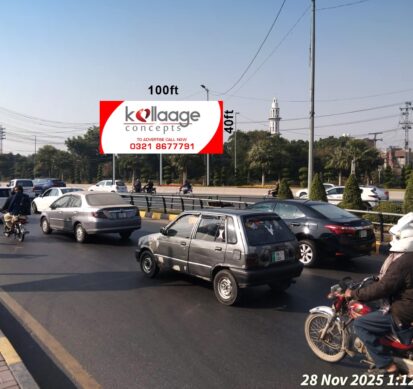
Not every billboard at a signal performs equally. Placement angle and distance from the stop line are critical factors.
The most effective placements are:
-
Directly in front of waiting vehicles
-
Slightly elevated to avoid obstruction
-
Positioned within natural line of sight
Billboards placed too far away or at sharp angles lose effectiveness, even if traffic volume is high. The goal is to align the ad with where people naturally look when they stop.
Digital Screens at Intersections
Digital Out-of-Home screens take signal-based advertising to another level. Their ability to display motion, change content, and remain visible at night makes them highly effective in high-dwell environments.
At intersections and underpasses, digital screens benefit from:
-
Motion Attraction: Movement captures attention instantly
-
Multiple Ads Rotation: More brands can share premium spots
-
Time-Based Messaging: Content can change based on time of day
-
Stronger Night Visibility: Bright displays maintain impact after sunset
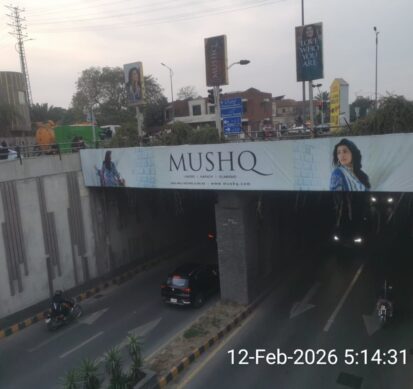
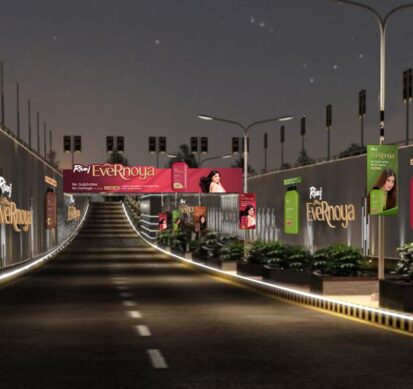
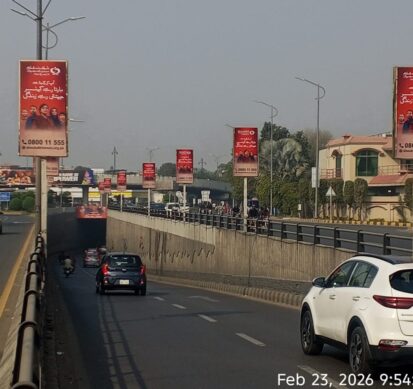
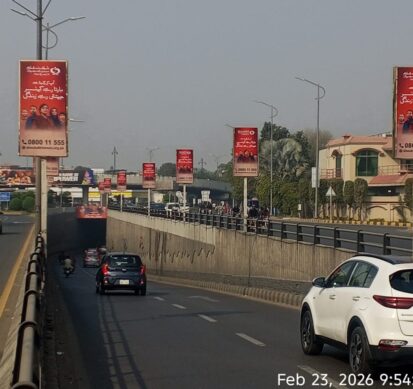
Underpasses like Etihad Group and Iman Underpass provide controlled environments where digital screens perform even better due to reduced visual clutter and focused attention.
Footfall and Traffic Volume Impact
Signals and intersections often handle thousands of vehicles per hour during peak times. In areas like DHA and surrounding zones, daily traffic can reach significant numbers due to residential, commercial, and transit movement combined.
Higher traffic volume means more impressions, but the real value comes from the combination of volume and dwell time. A busy signal with moderate traffic speed may outperform a highway with higher vehicle count but lower attention span.
This is why advertisers prioritize intersections over long straight roads when the goal is engagement and recall rather than just reach.
Matching Location with Target Audience
Different intersections attract different types of audiences.
-
DHA intersections: Affluent residents, professionals, and families
-
Commercial zones: Shoppers, office workers, and visitors
-
Transit corridors: Mixed audience with high movement frequency
Choosing the right signal based on audience type ensures that the message reaches people who are more likely to respond. A luxury brand, for example, will perform better at DHA intersections than in general traffic zones.
Timing and Peak Hour Strategy
Peak traffic hours increase both volume and dwell time. Morning and evening rush hours are especially valuable because:
-
Traffic congestion increases stopping time
-
Commuters follow fixed routes daily
-
Exposure frequency is higher within a short period
Aligning campaigns with these time slots improves overall effectiveness. Digital screens can further enhance this by running specific messages during peak hours for maximum impact.
Conclusion
Traffic signals and intersections are not just stopping points in a city’s road network, they are high-attention advertising zones. The combination of forced pauses, repeated exposure, and focused visibility makes them one of the most effective placements for outdoor advertising.
Brands that understand commuter behavior at these points can create campaigns that are not only seen but remembered. Simple messaging, correct positioning, and strategic location selection are the key factors that determine success.
Kollaage applies these principles across Lahore by selecting high-impact intersections, optimizing billboard placement, and using both static and digital formats to capture attention where it matters most. Through data-driven location planning and real-world execution, Kollaage turns everyday traffic signals into powerful brand touchpoints.
No Comment Yet! You can post first response comment.