
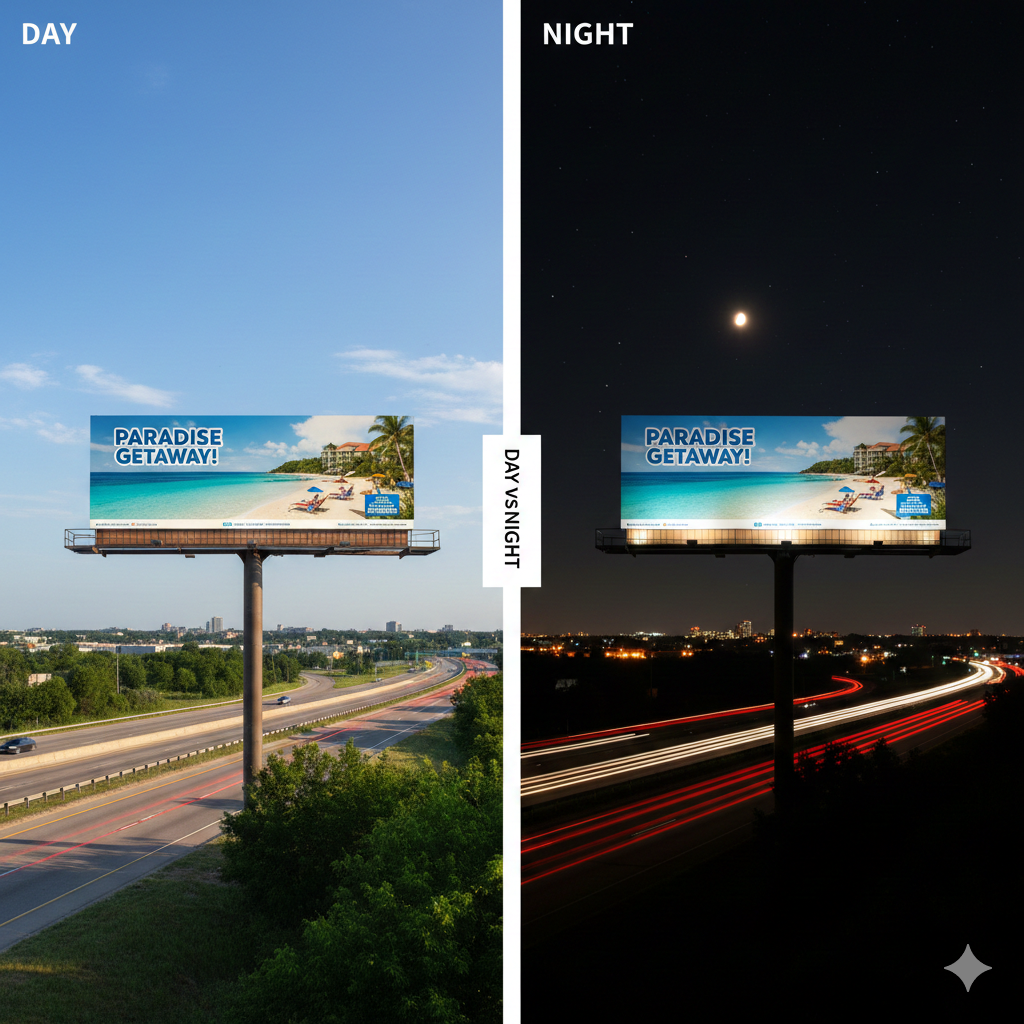
Billboards do not perform the same way throughout the day. Visibility changes depending on lighting, traffic patterns, and human attention levels.
In a city like Lahore, where roads stay active from early morning until late at night, understanding the difference between daytime and nighttime billboard visibility helps businesses decide how to design and place their ads properly.
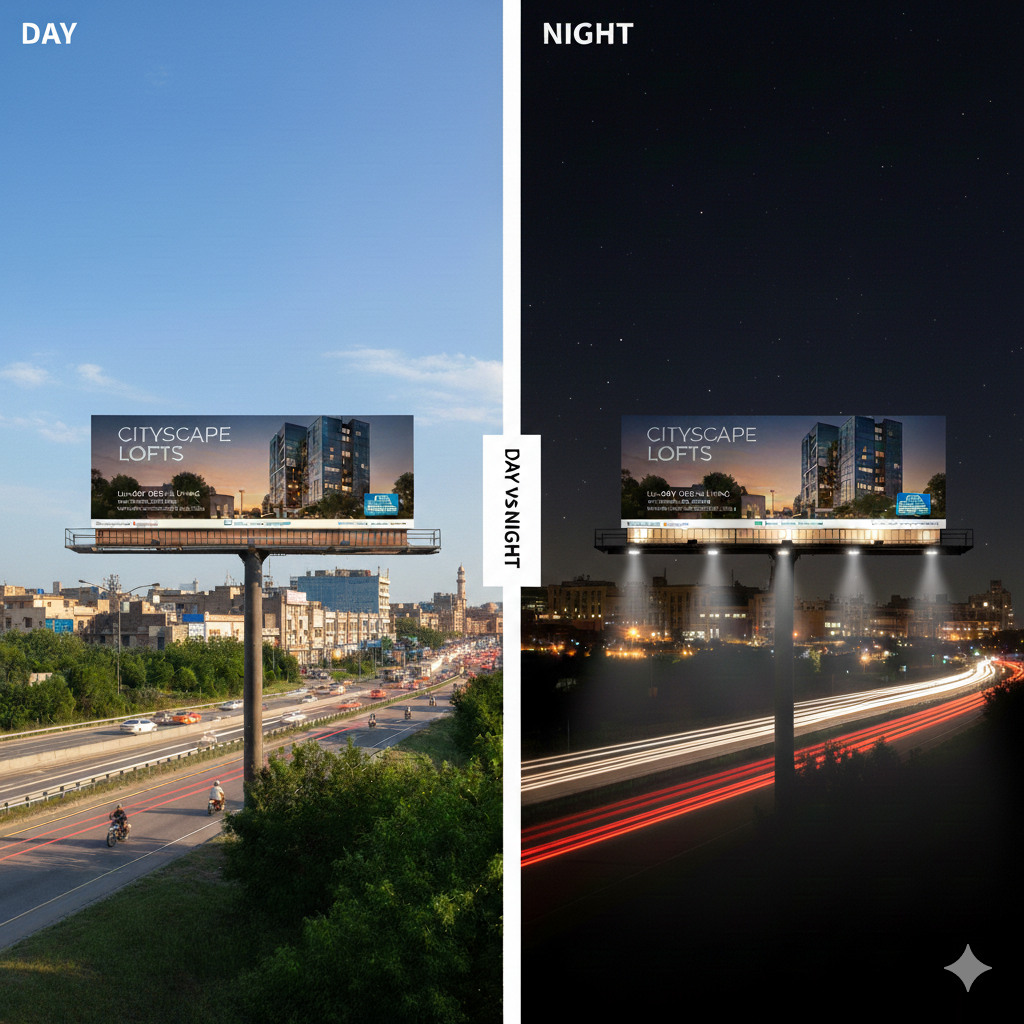
Daytime visibility
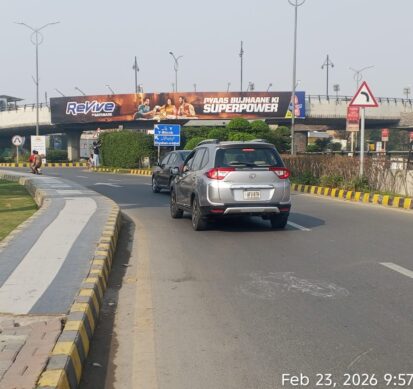
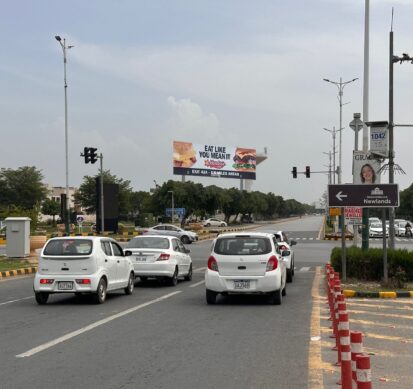
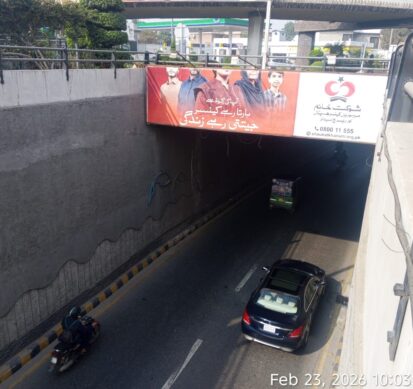
During the day, natural sunlight is the main source of illumination. This makes static billboards clearly visible, especially if they use high contrast colors and bold typography. White backgrounds with dark text, or dark backgrounds with bright lettering, perform better under strong sunlight.
However, daytime visibility also depends on weather conditions. Lahore’s summer sun can create glare, which reduces readability if the design lacks contrast. Dust in the air can also slightly dull colors. That is why simple layouts and strong color combinations matter more during daylight hours.
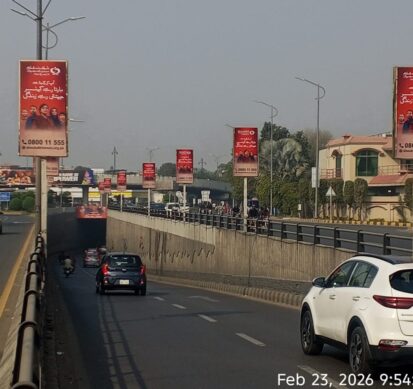
Traffic flow during the day is usually heavier, particularly in business districts like Gulberg, Jail Road, and DHA. More vehicles mean more exposure. Office workers, delivery riders, students, and families all pass through the same routes. This creates repeated impressions, which strengthens brand familiarity.
Digital billboards during the day compete with sunlight. If the LED brightness is not strong enough, the visuals may appear washed out. Well-calibrated digital screens still perform effectively, but they need high brightness levels to maintain clarity.
Nighttime visibility
At night, the entire dynamic changes. Artificial lighting becomes the primary source of visibility. Static billboards rely on external spotlights to remain visible. If lighting is properly installed and maintained, they can stand out clearly. Poor lighting, however, makes them almost invisible.
Digital billboards have a strong advantage at night. LED screens naturally glow in darker surroundings, making them highly noticeable. Movement and animation become more impactful because there are fewer competing visual distractions compared to daytime chaos.
In commercial areas like MM Alam Road or busy intersections in Lahore, digital billboards often draw significant attention after sunset. People are more relaxed in the evening, especially passengers rather than drivers. This slightly increases the chance of message retention.
Night traffic is usually smoother than daytime rush hours, but signal stops still create attention windows. A well-lit billboard near a traffic signal at night can capture focused attention more effectively than during the day.
Design differences for day and night
Effective billboard campaigns consider both lighting conditions. Designs that rely on subtle shades or light pastel colors may look good on screen but lose impact outdoors. Strong contrast works in both environments.
For static billboards, testing visibility under sunlight and under artificial lighting is important. For digital boards, brightness settings must adjust automatically between day and night to avoid glare or dullness.
Short messages perform well at all times. Whether it is 2 pm or 9 pm, drivers and passengers only spare a few seconds. Overloaded content fails regardless of lighting.
Psychological impact
Daytime billboards often feel informative. People are in work mode, running errands or commuting. Nighttime billboards feel more emotional. Lights, visuals, and calmer traffic create space for imagination.
Visually appealing brands often benefit from nighttime exposure because aesthetics stand out more clearly in illuminated conditions. Clean images, modern interiors, and artistic visuals feel stronger after sunset when competing noise decreases.
Which is more effective
There is no absolute winner between day and night visibility. Daytime offers higher traffic volume and repeated exposure. Nighttime offers stronger visual contrast and emotional impact, especially for digital billboards.
In Lahore’s environment, combining both creates the best results. A billboard that remains visible and readable throughout the day and shines clearly at night maximizes return on placement cost.
Final thoughts
Billboard effectiveness depends on clarity, placement, and lighting strategy. Day and night each bring different strengths. Brands that design with both conditions in mind gain better recall and stronger perception.
For visually driven businesses, this difference becomes even more important. A beautifully styled interior or premium canvas artwork displayed clearly during the day and glowing confidently at night can leave a lasting impression.
Brands like Kollaage, which focus on modern wall art and thoughtfully designed canvas pieces, naturally benefit from strong visual presentation. When people repeatedly see elegant wall setups on prominent roads during both daylight and evening hours, the idea of upgrading their own space becomes more real and achievable.
Outdoor Advertising,
No Comment Yet! You can post first response comment.